

 Dr. Devara S Srinivas
What Matters Beyond the Folding Screen?
Apple’s first foldable iPhone starts at $1,999 in the U.S. Its 5.4-inch outer display opens into a 7.6-inch inner screen. But the larger screen alone doesn’t make it the right phone: app support, camera compromises, price, and durability matter too.
This is a research-based overview, not a hands-on review. Apple’s specifications and battery estimates are manufacturer claims; observations about day-to-day use and comparisons below are attributed to independent reviewers.
The short answer
The Duo is most compelling for people who will regularly use its inner display for reading, video, games, or two-app multitasking. It is harder to justify if you prioritize a conventional iPhone camera, a lighter handset, or a lower price. Early reviewers praise the screen and hinge, but note uneven third-party app support and features missing from Apple’s Pro models.
What’s inside the foldable design?
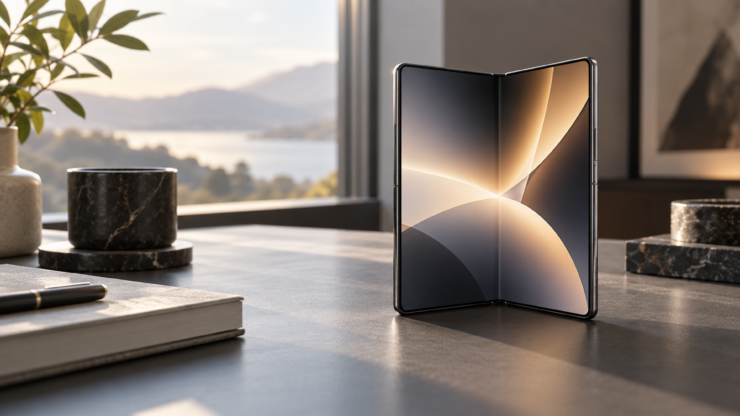
Apple lists a 5.4-inch outer Super Retina XDR display and a 7.6-inch inner display. The company says both use ProMotion and can reach 3,000 nits peak outdoor brightness. The inner panel has a nano-texture finish intended to reduce glare and make the crease less noticeable. Apple’s page also describes a titanium frame, an IP68 rating, and a hinge made from more than 100 components. These are design and lab specifications, not a guarantee that a foldable screen cannot be damaged.
The device can change roles without a separate tablet. Tom’s Guide reported using two apps side by side and setting the phone at different hinge angles, but found many third-party apps were not optimized yet. The larger canvas is most useful when the apps you rely on make good use of it. (Apple’s announcement; Tom’s Guide review)
Before buying, list your most-used apps and check their current layouts on the Duo. A spreadsheet or messaging app may benefit from extra room, while a poorly adapted app can simply stretch across a larger screen. The format is most valuable when the wider view changes what you can do, rather than just making the same content bigger.
The display trade-off is more than screen size
The nano-texture surface is designed to cut reflections. Tom’s Guide’s reviewer said this helped outdoors and made the crease harder to notice at many viewing angles, but also found the inner display’s colors less vivid than a glossy competing foldable. That is a subjective preference, but it points to a real choice: glare reduction and a matte feel can matter more to readers and commuters, while high-contrast, saturated video may look better to someone who prefers a glossy screen. (Tom’s Guide review; Tom’s Guide comparison with Galaxy Z Fold 8)
If you often read outdoors, glare reduction may matter more than color saturation. If movies and photos are the main reason to open the phone, compare displays in person if possible.
Cameras and everyday flagship compromises
The Duo’s foldable design brings camera-specific options, including using the outer display to preview a shot. Apple also lists 4K video recording at up to 120 frames per second in Dolby Vision on the main camera. These features may make group photos and flexible video setups easier, but they do not automatically make the Duo the best camera phone for every buyer.
Tom’s Guide identifies the lack of a telephoto camera and Face ID as trade-offs relative to the iPhone 18 Pro Max. In its comparison testing with Samsung’s Galaxy Z Fold 8, the outlet found strengths and weaknesses across camera scenarios rather than a universal winner. If optical zoom, Face ID, or a familiar Pro camera setup is central to your use, compare the exact camera hardware and independent sample images before choosing. Do not assume that the larger display means a more capable camera system. (Apple’s announcement; Tom’s Guide comparison)
Battery claims need context
Apple advertises up to 24 hours of use per charge when both displays are used equally, plus up to 31 hours of video playback on the inner screen or 44 on the outer. Its tests used preproduction phones and a representative profile; results vary by usage, configuration, and network. Playback figures are controlled estimates, not a promise of mixed-use runtime. (Apple’s announcement and test notes)
Compare test methods before battery numbers. Cellular streaming, video recording, navigation, multitasking, and display choice can all change runtime. If you often work away from a charger, look for repeatable tests and real-use notes.
Durability: what is known and what is not
Apple describes the Duo as IP68-rated and details the materials and construction it uses around the displays and hinge. That rating and those materials are useful information, but they do not make the inner folding screen equivalent to a conventional sheet of glass. A foldable also has a hinge and a flexible display surface, so care and repair terms should be part of the buying decision.
There have been early reports of cracked inner displays. Apple told TechRadar and Tom’s Guide it was aware of an issue affecting a “small number” of units and advised affected customers to contact AppleCare. TechRadar reported that the available cases and tests did not establish whether the reports reflected a wider design problem, misuse, or a limited manufacturing issue. Because the product has only recently launched, the long-term failure rate is not yet clear. Treat this as a real but unquantified concern, not proof that all units are defective. (TechRadar’s report and Apple statement; Tom’s Guide review)
Check local warranty, service, and accidental-damage coverage before buying; terms vary by country and plan. Viral durability tests may not represent ordinary use, but the acknowledged issue still deserves attention.
Who should consider the iPhone Duo?
The Duo makes the most sense for an iPhone user who will open it often, values a larger portable screen, and accepts the price and foldable-specific care. It may suit readers, commuters, and people who handle documents on the move.
It is less compelling if you rarely use a larger screen, want a lighter phone, depend on telephoto photography or Face ID, or prefer a longer reliability record. A conventional flagship may be more practical if camera, simplicity, and cost matter more.
A quick checklist before you buy
- Confirm the price, storage option, color, and availability in your country. Apple’s $1,999 starting price is the U.S. figure.
- Try the phone open and closed. Check whether its weight and outer-screen size feel comfortable to you.
- Check your essential apps for foldable layouts and side-by-side support.
- Compare the cameras with your current phone, especially if you rely on optical zoom or Face ID.
- Read battery tests that describe their methods and distinguish playback from mixed use.
- Review local warranty, repair, and accidental-damage coverage terms.
Frequently asked questions
Is the iPhone Duo worth buying?
It may be worth considering if you will use the inner screen frequently and value a foldable iPhone enough to accept its price and trade-offs. Buyers who mainly want a dependable camera-focused phone or a lower-cost upgrade should compare conventional models first.
Does the iPhone Duo have a visible crease?
Apple says its nano-texture treatment is designed to minimize crease visibility. Tom’s Guide reported that the crease was difficult to see at many angles, though it remained visible under certain lighting and viewing positions. Individual perception may vary.
How long does the iPhone Duo battery last?
Apple’s stated estimate is up to 24 hours of usage when both displays are used equally. Actual runtime depends on activity, network, signal, settings, and other conditions, so consult independent tests for a more useful comparison with another phone.
Is the iPhone Duo durable?
Apple lists an IP68 rating and describes reinforced materials, but the long-term reliability of the folding display is not yet established. Apple has acknowledged an issue affecting a small number of units and says affected customers should contact AppleCare. Check current service terms and coverage before buying.
The verdict
The iPhone Duo’s strongest argument is that it combines a pocketable iPhone with a genuinely larger workspace and viewing area. That can be useful every day—but only if your apps and habits take advantage of it. The price, camera compromises, weight, uneven app optimization, and early display reports make this a product to choose deliberately. If the foldable screen solves a problem you often have, the Duo is worth a close look. If it is mostly a novelty, a conventional flagship is likely the safer value.
Internal-link suggestions: link to an existing iPhone 18 Pro Max review, a foldable-phone comparison, and a guide to smartphone battery testing if those pages exist on the site.



Add comment